
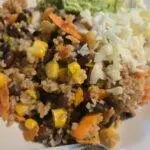
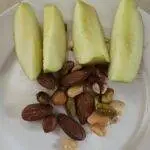




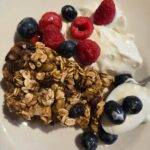



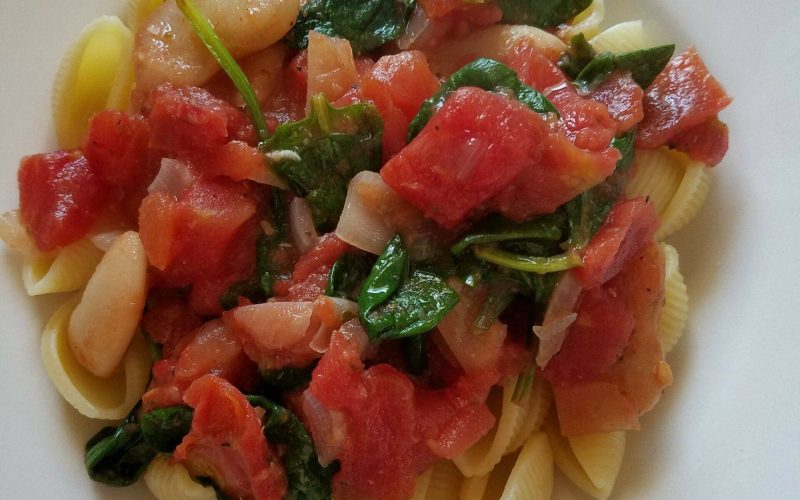


Affordable week 1 menu for 2 includes ideas for breakfast, lunch and dinner. You can substitute different vegetables if you don’t like the ones I’ve selected. Also, if you don’t like some of the spices found in the recipes substitute them for ones you do like.
All recipes are suggestions. I can’t remember the last time I followed a recipe exactly to how it was written. I use what I have to keep cost down. If I don’t have the pasta it calls for I just make one I do have. If I don’t have the type of beans it suggests I use ones I do have.
The very best way to save money is to make a larger batch of something you are already cooking and eat it two or three times in a week. Andrew and I really enjoy leftovers and as a bonus we don’t need to cook that night.
Nutritional Insight
Everyone has their own nutritional deficiencies and goals they are trying to manage on a daily basis. Our household is trying to accomplish anti-inflammatory, high protein and high fiber. It’s not easy and every meal does not always meet the mark.
We try to focus on making sure we incorporate a variety of fresh fruits, vegetables, berries, fatty fish, healthy oils, lean protein, legumes, fermented foods, nuts, warm spices, and whole grains through the week. We really try to limit or not eat fried foods, processed cheeses, processed meats, packaged snacks, sugary drinks, and baked sweets.
Affordable Week 1 Menu for 2 People
Sunday
Snack
- 1 Small Apple
- Unsalted Nuts
- 1/8 cup
Monday
Snack
- 1 Small Apple
- Unsalted Nuts
- 1/8 cup
Tuesday
Snack
- 1/4 cup cottage cheese
- 1 small apple
Wednesday
Snack
- 1/4 cup cottage cheese
- 1 small apple
Thursday
Snack
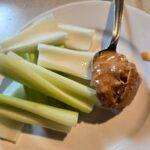
- 2 sticks celery
- 1/2 tablespoon all natural peanutbutter
Friday
Snack
- 2 sticks celery
- 1/2 tablespoon all natural peanutbutter
Saturday
Snack
- 2 sticks celery
- 1/2 tablespoon all natural peanutbutter
Grocery List
Tips and Tricks for the daily meals to go flawlessly!
Always start by reading the recipe all the way through then read my tips. Doing this before you start will help prevent “surprises” along the way.
If I’ve posted it then I have eaten it and called it good. Also, I know that the portions should work because I have done it. No guess work here.
Measuring out your portion might be new for you and still leave you hungry after the meal. This is normal and it will take your body time to adjust. Try these tips:
- Don’t miss your afternoon snack because being ravenous at dinner time will lead to over eating.
- Drink 8 ounces of water before you begin your meal and after you end your meal.
- Eat salad, vegetable soup or raw vegetables with your meal.
- Eat a piece of fruit after a meal like an apple, pear, orange, etc. This will subside the hunger and it’s good for you.
- Wait 1 hour after your meal and if you are still hungry make some pop corn.
Prep the week!
Let's start prepping!
I like have a few vegetables washed and placed in containers for easy snacking. If I have vegetables washed and ready to eat we are more likely to eat them than let them go to waste.
I try to start the week by making some sort of healthy dip such as hummus then cut up:
- celery
- carrots
- snow peas
- radishes
- cucumber (although not our fav)
If I have bought a large fruit such as a melon or pineapple I cut it up right away so it it is easy to grab and eat. We eat considerably more fruits and vegetables if they are already washed and ready to eat.
Vitamins and Minerals
Blurbs on How they are Important
- Antioxidants
- Fights tissue-damaging oxygen molecules known as free radicals.
- Avenanthramides – reduce inflammation and relax arteries improving heart health
- Vitamin A
- Preserves your vision, strengthens your immune cells by supporting white blood cells and the mucus membranes in your lungs, intestines and uinary tract. Wards of infection and toxins that cause inflammation and disease.
- Carotenoids (provitamin A) plant based foods such as carrots, sweet potatoes. Need to eat with healthy fats in order to consume this.
- Retinoids (retionol or preformed vitamin A) are found in animal based foods such as eggs, fish, milk and liver
- Niacin (B3)
- Your gut converts it into two coenzymes: Nicotinamide adenine dinucleotide (NAD) and nicotinamide adenine dinucleotide phosphate (NADP). These coenzymes allow your body’s cells to communicate and work properly.
- Vitamin B6
- Has antioxidant and anti-inflammatory properties. It makes DNA, Hemoglobin, and Neurotransmitters (the chemical messengers that send signals from nerve cells to other cells
- Fiber
- Pectin – breaks down in your gut and helps with diarrhea and constipation.
- Soluble fiber traps cholesterol-containing bile, removing it from the body before it is absorbed.
- Beta-glucan lowers cholesterol and helps the body empty the bowel.
- Insoluble fiber Absorbs water to cause stools to become larger, firmer, and easier to pass.
- Flavoniods
- Plant compounds that offer a range of health benefits including antioxidant, anti-inflammatory, and anti-cancer properties
- Folate (Vitamin B9)
- Body uses to make healthy blood cells and support your nervous system
- Vitamin C
- Immunity booster and one of the most important antioxidants in your diet. It helps to neutralize free radicals harmful molecules that can damage your cells and increase your risk of chronic disease.
- Consuming vitamin C in the same meal as iron rich plant foods boots your body’s ability to absorb iron.
- Vitamin C can decrease wrinkles, improve effectiveness of sunscreen and reduce areas of discoloration.
- Vitamin K
- Helps regulate clotting and helps keep your blood pressure in check. You need to eat some healthy fats along with foods rich in Vitamin K in order for it to really absorb.
- Fats are avocado, heart healthy oils, nuts, 2% milk, yogurt, olives or seed
- Helps regulate clotting and helps keep your blood pressure in check. You need to eat some healthy fats along with foods rich in Vitamin K in order for it to really absorb.
- Carotene
- Gets converted to vitamin A. It is a great source of antioxidants and full of anti-inflammatory properties.
- Carotenoids
- Pigmented nutrients that are made by plants and algae as well as some bacteria and fungi. They are antioxidants that battle free radicals.
- Iron (mineral)
- is a key component of hemoglobin which carries oxygen from the lungs to the rest of the body. It is vital for brain development and function, helps create and spread immune cells, a key component of myoglobin which provides oxygen to muscles and gives your body energy. Iron also is involved in the production of hormones and the regulation of body temperature.
- Magnesium (mineral)
- Regulates blood pressure and blood sugar levels and promotes energy production and nerve function bone health.
- Magnesium glycinate helps promote sleep
- Magnesium citrate is a powerful laxative
- Magnesium oxide is an antacid and migraine relief aid
- Magnesium sulfate (Epsom slat) muscle relaxant
- Regulates blood pressure and blood sugar levels and promotes energy production and nerve function bone health.
- Manganese (mineral)
- Helps you process cabohydrates and fat and create hormones. It is critical for healthy bones, connective tissue, blood clotting and nerve function. It lowers inflammation
- Potassium
- Electrolyte that carries a positive electrical charge which balances the fluid in your cells, contracts muscles, transmits nerve signals to your brain. It consumes the salt in your body lowering your blood pressure.
